
Big Stage, Big Moments: What the World Cup Teaches Us About Playoff Pressure
Jun 15, 2026By Dr. Brad Miller
Every four years, the FIFA World Cup gives us a front-row seat to the highest-pressure environment in soccer.
Millions of people are watching. Expectations are enormous. Careers, legacies, and lifelong dreams can feel tied to a single moment.
While most youth players will never compete on a World Cup stage, they will experience many of the same emotions during playoffs and championship tournaments.
Whether it's the World Cup, ECNL Playoffs, MLS NEXT Playoffs, NPL Finals, State Cup, or high school postseason soccer, the mental challenges are remarkably similar:
-
Pressure
-
Self-doubt
-
Fear of mistakes
The World Cup reminds us that performing under pressure is not just a physical or technical challenge.
It's a mental one too.
Why Pressure Peaks During Playoffs and Big Tournaments
Pressure tends to increase when these two things happen at the same time:
-
Something is very important to us.
-
We strongly want a specific outcome.
As the World Cup moves into the knockout rounds, every game feels bigger because the consequences feel bigger. A loss means the tournament is over.
Youth playoffs create the same dynamic.
The brain starts focusing on questions like:
-
What if we lose?
-
What if I make a mistake?
-
What if I let my team down?
This isn't because athletes are weak.
It's because the brain is doing what it was designed to do: protect us from potential threats.
Unfortunately, the brain doesn't always distinguish between physical danger and emotional danger. To the protective part of the brain, disappointment, embarrassment, or failure can feel much bigger than they actually are.
That's why playoff pressure often feels so intense.
What the FIFA World Cup Reveals About Mental Resilience
One of my favorite quotes comes from the Navy SEALs:
"Under pressure, you don't rise to the occasion; you sink to the level of your training."
The World Cup is a perfect example.
When pressure is highest, players don't suddenly develop a stronger mental game. They rely on the habits and skills they developed long before the tournament began.
When pressure rises, players rely on:
-
Their preparation
-
Their routines
-
Their mental performance skills
Mental resilience helps players:
-
Recover from mistakes
-
Stay composed after setbacks
-
Continue competing when emotions are high
The World Cup doesn't create mental resilience.
It reveals it.
How Emotions Intensify in High-Stakes Matches
As the stakes increase, emotions naturally become stronger.
Why?
Because the brain's threat detection system becomes more active.
The brain begins treating the situation as if something catastrophic could happen, even when the real consequence is losing a soccer game.
Common responses include:
-
Increased anxiety
-
Fear of mistakes
-
Difficulty staying present
This is true whether you're playing in a World Cup quarterfinal or a youth playoff semifinal.
The important thing to remember:
Emotions are not evidence that you're unprepared.
They're evidence that what you're doing matters.
Why Managing Emotions Matters More Than Emotional Avoidance
Many athletes spend energy trying not to feel nervous.
They try to:
-
Push away anxiety
-
Eliminate self-doubt
-
Ignore uncomfortable emotions
The problem is that emotions don't disappear when we ignore them.
They usually return stronger.
The goal isn't emotional avoidance.
The goal is to manage our emotions.
The best players in the world still experience:
-
Pressure
-
Anxiety
-
Self-doubt
The difference is that they've learned how to manage those emotions instead of fighting them.
A more helpful response sounds like:
"Of course I'm nervous. This game matters. I've prepared for this, and I have tools to manage it."
The more confidence players build in handling emotions, the less threatening those emotions become.
Instead of fearing emotions, learn to recognize them, accept them, and use the tools you've practiced to work through them.
Resetting Between Moments in Playoff Games
One of the most important mental skills players can develop is the ability to reset quickly during a game.
World Cup players understand the importance of recovery.
Not just physical recovery.
Mental recovery too.
Soccer places enormous demands on attention, decision-making, and managing emotions. Without resets, mental fatigue can build quickly.
Great reset opportunities include:
-
Throw-ins
-
Set pieces
-
Injury stoppages
Simple ways to reset include:
-
One deep breath
-
Repeating a mantra
-
Refocusing on your next action
The goal is simple:
Let go of the last play and return to the present one.
The players who recover fastest mentally often perform best when the game is on the line.
Mental Tools Players Can Use During Youth Playoffs
Playoffs are not the time to search for confidence.
They're the time to trust your preparation.
Focus on What's Similar
The brain feels safer when things feel familiar.
Ask yourself:
-
What is the same as a regular-season game?
-
What routines haven't changed?
-
What preparation have I already done?
The more familiar the situation feels, the less threatening it becomes.
Predict Challenges
Every tournament includes adversity:
-
Mistakes will happen.
-
Bad calls will happen.
-
Unexpected setbacks will happen.
Instead of hoping adversity won't show up, prepare for it.
Ask yourself:
"When certain challenges happen, how do I want to respond?"
Preparation reduces surprise.
Reduced surprise improves confidence.
Use a Simple Mantra
Pressure tends to pull attention toward outcomes.
Mantras help bring attention back to actions.
Examples include:
-
Next play.
-
Help my team.
-
Focus and compete.
Simple phrases can become powerful anchors during difficult moments.
Reset With Your Breath
Breathing is one of the fastest ways to calm the body's stress response.
Use it:
-
Before matches
-
After mistakes
-
During stoppages
The breath is always available.
Use it.
Focus on What You Can Control
One of the biggest mistakes players make during tournaments is focusing on things they can't control.
You can't control:
-
Referees
-
Field conditions
-
Opponents
You can control:
-
Effort
-
Response
-
Communication
Those three areas deserve most of your attention.
The more attention you place on controllable actions, the more consistent your performance becomes under pressure.
Final Thoughts
As we watch the World Cup, we'll see incredible goals and unforgettable moments.
We'll also see players managing pressure, responding to adversity, and recovering from mistakes.
Those same challenges exist in youth soccer every playoff season.
The scale may be different.
The mental game is not.
The players who perform best under pressure are not the players who never feel nervous.
They're the players who:
-
Trust their preparation
-
Use their tools
-
Reset quickly
-
Focus on what they can control
Because big games don't change players.
They reveal them.
Mental Health Tip
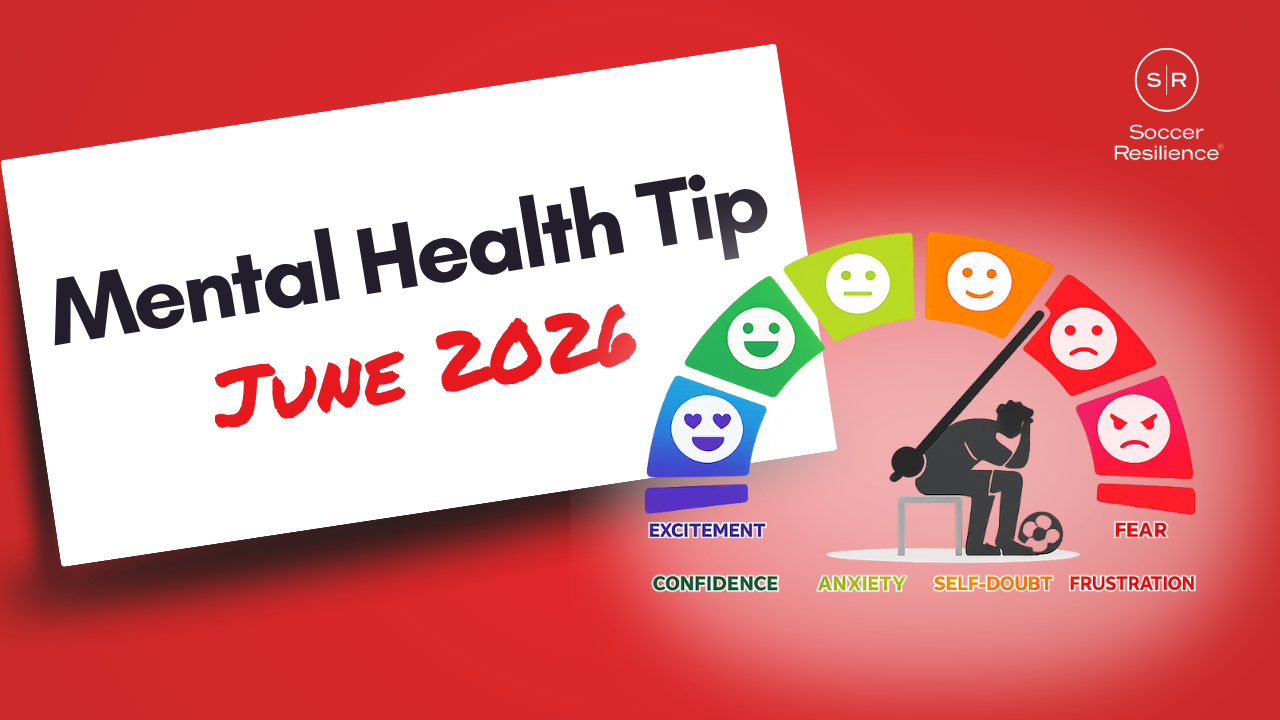
Emotions Are Normal Under Pressure
When something matters, emotions show up.
That might include:
-
Anxiety
-
Self-doubt
-
Embarrassment
-
Fear
The goal isn't to get rid of those emotions.
The goal is to manage them.
When we avoid emotions, suppress them, or pretend they don't exist, they often return stronger.
When we acknowledge them and use mental resilience tools to work through them, they become easier to handle.
Remember:
Difficult emotions are not a sign that something is wrong.
They're often a sign that something is important.
The more confidence you build in your ability to manage emotions, the less power those emotions have over your performance and well-being.
Stay connected with news and updates!
Join our mailing list to receive the latest news and updates from our team.
Don't worry, your information will not be shared.
We hate SPAM. We will never sell your information, for any reason.
