Competing for Playing Time Without Losing Confidence
Mar 15, 2026By: Dr. Brad Miller
Playing time is one of the most emotional parts of soccer.
Players train hard all week. They prepare for the game. They want to contribute.
But on every team, minutes are limited.
When players don’t get the playing time they hoped for, confidence can start to drop. They begin comparing themselves to teammates, questioning their ability, and wondering what they did wrong.
This is one of the most common mental challenges in youth sports.
The key is learning how to compete for playing time without letting it damage your confidence.
That starts with shifting your mindset - from comparison to growth.
Why Playing Time Uncertainty Hits Confidence So Hard
Few things in sports feel as personal as playing time.
Players often connect their value directly to the number of minutes they play.
When minutes drop, many athletes immediately start questioning themselves:
-
Am I good enough?
-
Why is someone else playing instead of me?
-
What am I doing wrong?
When one's identity becomes tied to playing time, every lineup decision feels like a judgment of one's self-worth.
But playing time decisions are rarely that simple.
Coaches balance many factors:
-
Team tactics
-
Matchups
-
Development priorities
-
Game situations
When players tie their identity to those decisions, confidence becomes fragile.
Separating Identity from Roles, Minutes, and Lineups
Every player has a role on the team.
Those roles can include:
-
Starter
-
Rotation player
-
Substitute
-
Developing player
The one constant in sports is that roles change.
But identity should not.
The goal is for a player’s identity to come from:
-
Effort
-
Willingness to take on challenges
-
Character
-
Commitment to improvement
When one's identity becomes tied to outcomes - minutes played, goals scored, shutouts - confidence rises and falls constantly.
Players high is resilience separate who they are from what happened today.
Your role may change.
Your value as a player and person does not.
How A Growth Mindset Protects Confidence During Competition
Every competitive team has internal competition.
Multiple players are often fighting for the same position.
How players interpret that competition matters.
A comparison mindset sounds like this:
-
“Why are they playing instead of me?”
-
“They’re better than me.”
-
“I need them to struggle so I can succeed.”
This mindset creates anxiety, frustration and disconnection.
A growth mindset sounds different:
-
“What can I improve today?”
-
“How can I be better than I was yesterday?”
-
“What can I learn from the players around me?”
In this mindset, teammates are not threats.
They are catalysts for growth.
High performing and close-knit teams teams push players to improve because they are surrounded by teammates who challenge them.
What Players Can Control When Minutes Aren’t Guaranteed
A player cannot control their coach's decisions.
But a player can control their response.
When playing time is uncertain, focusing on what we can control protects both confidence and development.
Effort
Bring intensity and focus to every training session.
Preparation
Take care of your body, mindset, and recovery.
Attitude
Respond to adversity with resilience and action.
Learning
Use mistakes and feedback as tools for improvement.
Consistency
Show coaches that you are reliable and coachable.
These controllables build habits that lead to long-term growth - and often lead to more opportunities over time.
How Parents and Coaches Can Support Confidence
Parents and coaches can influence how players interpret playing time challenges.
The goal is to keep the focus on development instead of comparison.
Helpful ways to support players include:
-
Asking what they learned from the game instead of how many minutes they played
-
Reinforcing effort and improvement
-
Encouraging patience during development
-
Helping players focus on what they can control
Conversations that focus only on playing time can unintentionally increase pressure and frustration.
Confidence grows when players feel supported in their growth, not just their results.
Building Confidence That Doesn’t Depend on Outcomes
Players high in resilience build confidence differently.
Their belief in themselves does not depend on a lineup or one performance.
It comes from preparation.
It comes from effort.
It comes from knowing they are improving.
When confidence is built on daily habits and personal growth, it becomes far more stable.
Roles may change.
Opportunities may fluctuate.
But if the player believes they can improve, they will continue to take on challenges and grow until the next opportunity arrives.
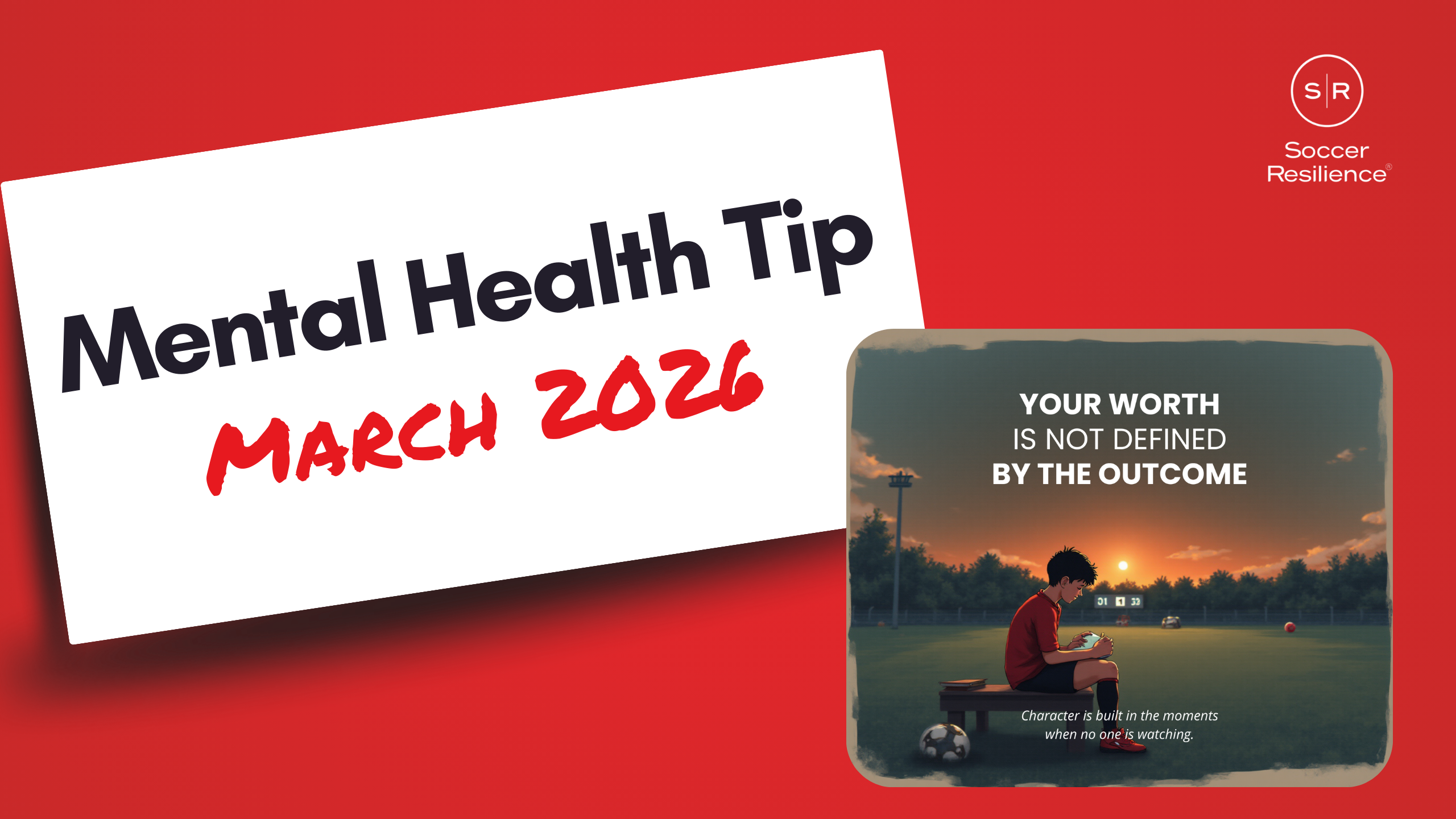
🧠 Mental Health Tip
Separate Identity from Outcomes
Tip: Build your self‑respect around what you control, not the results you get.
When you tie your identity to outcomes, self-respect rides a rollercoaster. Success can feel great in the moment, but setbacks or disappointing results can quickly make self‑worth drop.
A healthier approach is to anchor your identity to controllable behaviors: effort, attitude, willingness to step outside your comfort zone, integrity, and how you treat others.
Try This:
-
At the end of each day, write down one thing you did that built your self‑respect.
-
It might be giving strong effort, supporting someone around you, or challenging yourself to try something difficult.
-
Keep a short daily list in a journal.
Focusing on these daily actions strengthens and steadies self‑respect and supports healthier mental well-being.
Ready to Train Your Mental Game?
Turn what you’ve learned into practical, repeatable skills with Foundations training designed specifically for soccer players, parents and coaches.
Get Soccer Mental Performance Insights
Receive practical mental performance tools, new articles, and Soccer Resilience updates for players, parents, and coaches.
We hate SPAM. We will never sell your information, for any reason.